
Common Tech Questions
Draft, controls, accessories, and makeup air
Straight answers to the questions we hear most. If yours isn't here, call 800.642.2920 or send plans and we'll work through it with you.
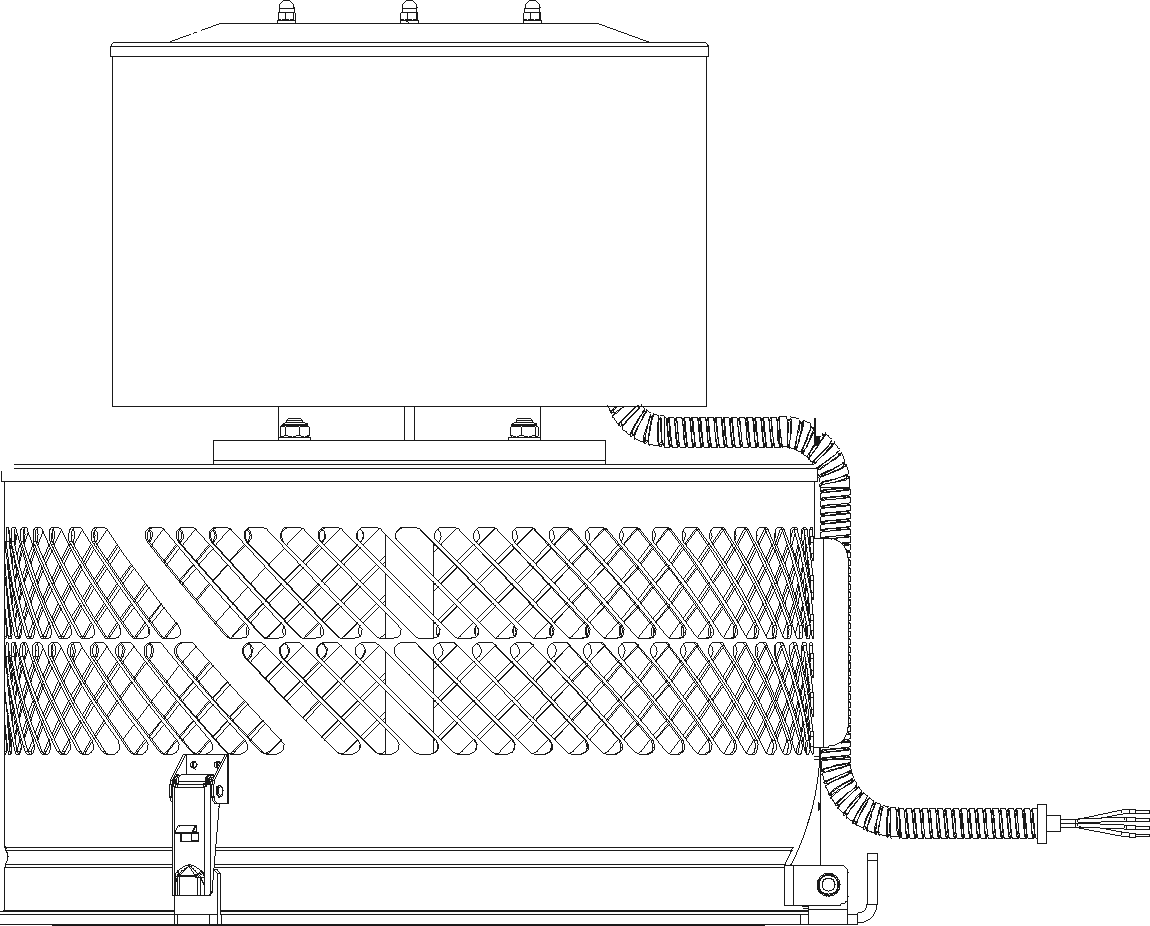
Draft Inducers
Draft and Draft Inducers.
- Q.01What's the difference between a draft inducer and a natural draft chimney?
- A natural draft chimney works because hot flue gas is lighter than the air around it. That lift is only a few Pascals at a cold start, and the house, exhaust appliances, and wind can all take it away. A draft inducer at the end of the flue run pulls the flue mechanically, and the controller proves draft every time the appliance runs, whatever the house or the weather is doing.
- Q.02Will I hear it?
- XV Series sound power is independently tested by Riverbank Acoustical Laboratories and published by octave band, from full speed down to 38 V. The controller runs the draft inducer only as hard as the flue needs, the 45° discharge sends sound up and away, and the vibration dampener keeps motor vibration out of the structure. The fire should be the loudest thing in the room.
- Q.03Is it the same draft inducer for gas, wood, and grease?
- Yes. XV Series draft inducers are listed to UL 378 and UL 705, including UL 705 Supplement SC for restaurant exhaust. They are rated to 1,000°F continuous and 1,400°F intermittent. The controller is what changes with the fuel.
- Q.04Does it have to sit on top of the chimney?
- No. It mounts at the end of the flue run, vertical or horizontal, wherever the design terminates. On an existing fireplace it usually mounts on the chimney top.
- Q.05Do I need an electrician?
- No. X-VENTISO systems plug into a standard 120 V outlet, with factory-wired, plug-in Molex connections from draft inducer to controller. No hardwiring. If a job needs hardwiring, we build it as a custom solution on request.
- Q.06How long are the leads, and what if my run is longer?
- Every X-VENTISO draft inducer and damper ships with a 30 ft Molex lead, the same on every model. For a longer run, we make one continuous lead cut to the job, so there is no joint in the run. Extensions are also available in 20, 50, and 100 ft; keep every extension connection accessible, never inside conduit or a closed wall. Call 800.642.2920 with the run length.
- Q.07How is a system sized?
- By the appliance, the flue, and the building together. Flue size also sets how quiet the system is: we design gas flues for flow noise at or below 30 dB and solid fuel flues at or below 35 dB. Use the Flue Calculator (opens in a new tab), or send plans and we size it with you.
Existing Fireplaces
Fireplaces That Smoke.
- Q.08My fireplace drafted fine for years. Why does it smoke now?
- Usually something changed around it. Inside: the house got tighter (windows, doors, spray foam, a remodel) or a new exhaust appliance pulls against the flue. Outside: trees grew, or a new building or roof line now sends wind down onto the chimney top.
- Q.09Can a draft inducer go on an existing fireplace?
- Often, yes. We make custom adapters for any chimney size or setup: round, square, rectangular, masonry, or factory-built. Send photos of the chimney top and the fireplace, plus the flue size, and we will tell you what it takes. On gas, the appliance needs electronic ignition so the interlock can do its job.
- Q.10Will makeup air alone fix a smoking fireplace?
- It fixes what happens inside the house: exhaust appliances and a tight envelope pulling the room negative. It cannot reach wind sitting on the chimney top. A draft inducer answers the outside force, makeup air answers the inside one, and many fireplaces need both.
Controls
Controls and Safety.
- Q.11What's the difference between a gas controller and a solid fuel controller?
- A gas fire can be stopped, so the gas controller is interlocked with the appliance: no proven draft, no fire. Meridian also modulates the draft inducer to the room. A wood fire cannot be shut off, so Controlled Power WBC proves draft and sounds a built-in audible and visual alarm if draft is lost.
- Q.12Isn't a fan speed control enough?
- No. A speed control, often called a rheostat, sets how fast the fan turns. It does not prove there is draft, and it cannot stop the appliance if draft is lost. Where a fireplace uses mechanical draft, the codes ask for exactly that: on gas, NFPA 54 calls for gas to the main burner to shut off if the draft system is not performing; on solid fuel, where the fire cannot be shut off, NFPA 211 calls for an audible and visual alarm. A fan speed control is not a draft control. Every X-VENTISO controller proves draft, with the gas interlock or solid fuel alarm in the box.
- Q.13Which gas appliances work with the interlock?
- Electronic ignition appliances. The interlock lets the appliance fire only once draft is proven. X-VENTISO does not supply controls for match-lit appliances.
- Q.14What happens if the power goes out?
- On gas, the appliance will not light: the interlock needs proven draft before it lets the appliance fire. When power returns, the system proves draft first. On solid fuel, if power is lost while the system is on, the controller sounds its audible and visual alarm; it does not alarm just because the house has no power while the fireplace is off. Gas dampers fail closed and seal the flue until power returns; the solid fuel damper fails open.
- Q.15How do I control two, three, or four flues?
- WBC-DUO and GBC-DUO run two draft inducers together as one, and if either flue faults, the system alarms, and on gas the appliance is shut off. Meridian DUO runs two flues independently, each referenced to the room. XV-MULTICTRL links two Controlled Power controllers of the same fuel type to one MUC, so a DUO plus a single covers three flues and two DUOs cover four. XV-INTG links any X-VENTISO controllers on one call, starting them one after another: a Meridian DUO plus a Meridian, or a GBC-DUO plus a GBC, covers three flues. It never mixes Meridian with Controlled Power on one appliance.
- Q.16Can it connect to a building automation system or home automation?
- Meridian and VMASS connect to building automation over BACnet or Modbus, your choice, set up at our factory before the controller ships. Controlled Power turns on and off by dry contact, from a switch, a remote, or home automation. See Automation for what each controller reports.
- Q.17Can the controller be mounted outdoors?
- The controllers are NEMA 1. They do not need conditioned space, but they do need protection from rain and direct sun, so mount them under cover. For extra protection, we build custom enclosures on request.
Accessories
Dampers, Silencers, and Accessories.
- Q.18What does a flue damper do, and which one do I need?
- A damper closes the flue when the fire is off, so conditioned air is not lost up the chimney. On gas, a sealed gas damper, top-mount at the termination or inline inside the chase. On wood, the automatic solid fuel damper opens from the switch, proves it is open, and alarms if it is not. On power loss, gas dampers fail closed and the solid fuel damper fails open.
- Q.19Does every system need a flue silencer?
- No. WSPRDraft is for gas installs where the room has to be truly quiet. It goes in the flue run, absorbs the sound that travels down, and is matched to XV Series draft inducers. Silencers are not used on solid fuel.
- Q.20What does a vibration dampener do?
- It isolates the draft inducer from the chimney, so motor vibration stays at the draft inducer instead of traveling down the structure into the house. Each one is sized to its XV model.
- Q.21What is the rain collar for?
- It keeps rain and weather out around the lower body of the draft inducer at the termination.
- Q.22How do I choose an adapter?
- You don't have to. Send photos of the chimney top and the flue size, and we make the adapter to fit: round, square, rectangular, masonry, or factory-built.
Makeup Air and VMASS
Makeup Air and VMASS.
- Q.23Do I need makeup air?
- If exhaust appliances can pull the room negative enough to spill the fireplace, yes. An open fireplace can begin to spill at 3 to 4 Pa, and a 400 CFM range hood can pull a tight house to roughly 7 to 8 Pa. Pressure, not CFM, is what decides whether a fireplace drafts.
- Q.24Isn't a cracked window or an outside air kit enough?
- A passive opening only lets air in once the room is already negative, because the pressure difference is what pulls air through it. It brings in air at outdoor temperature and cannot tell a calm night from a windy one. A powered unit that senses the room supplies air before the room drops.
- Q.25How is VMASS different from a fixed-rate makeup air unit?
- A fixed-rate unit supplies the same air whatever the room needs. VMASS measures zone pressure against outdoors and controls the zone to neutral, supplying only the air it needs. Interlocked with a range hood, it starts with the hood and ramps to replace what the hood removes.
- Q.26How many VMASS units for my range hood?
- One VMASS per 400 CFM of hood rating.
- Q.27Does VMASS bring in cold air?
- VMASS has a built-in 2.0 kW heater that tempers the incoming air, and it supplies only what the zone needs rather than a fixed volume.
Code and Support
Code, Outdoors, and Getting Help.
- Q.28Is X-VENTISO code compliant?
- X-VENTISO systems are designed for NFPA 54 (gas) and NFPA 211 (solid fuel) installations: proven draft, with the gas interlock or solid fuel alarm in the box with every controller package. See Code Compliance for what ships in every box, by code.
- Q.29Do outdoor fireplaces need a draft inducer?
- Outdoors, specific venting codes may not apply, but under a roof smoke rolls back toward the seating area, and wind is always part of it. A covered outdoor room can also count as indoors once it is enclosed enough. See Outdoor Living for when an outdoor room is still outdoors.
- Q.30Will you design the system for us?
- Yes. Send plans and we size the draft inducer, controls, and makeup air with your architect and engineer. You install. Or call 800.642.2920.
- Q.31Can you build something that isn't in the catalog?
- Yes. Custom adapters, enclosures, hardwired controls, and one-off configurations are built on request. See Custom Solutions.